The product gave members no compelling reason to return
SaverLife is a nonprofit that rewards low-income Americans for building savings habits.
The stakes
Without returning members, SaverLife couldn’t show it helped people save, putting its funding at risk.
What did I do
Rebuilt the core experience around a new habit loop based on gamification.
The result
Retention doubled year over year.
Created and reinforced savings habits
Improved financial literacy
Gave members better reasons to visit every week
Business impact
The gains held for 12+ months after launch creating lasting behavior change.
At a glance
Before
Scattered features meant no habit formed
Members saw SaverLife as a lottery, not a savings tool
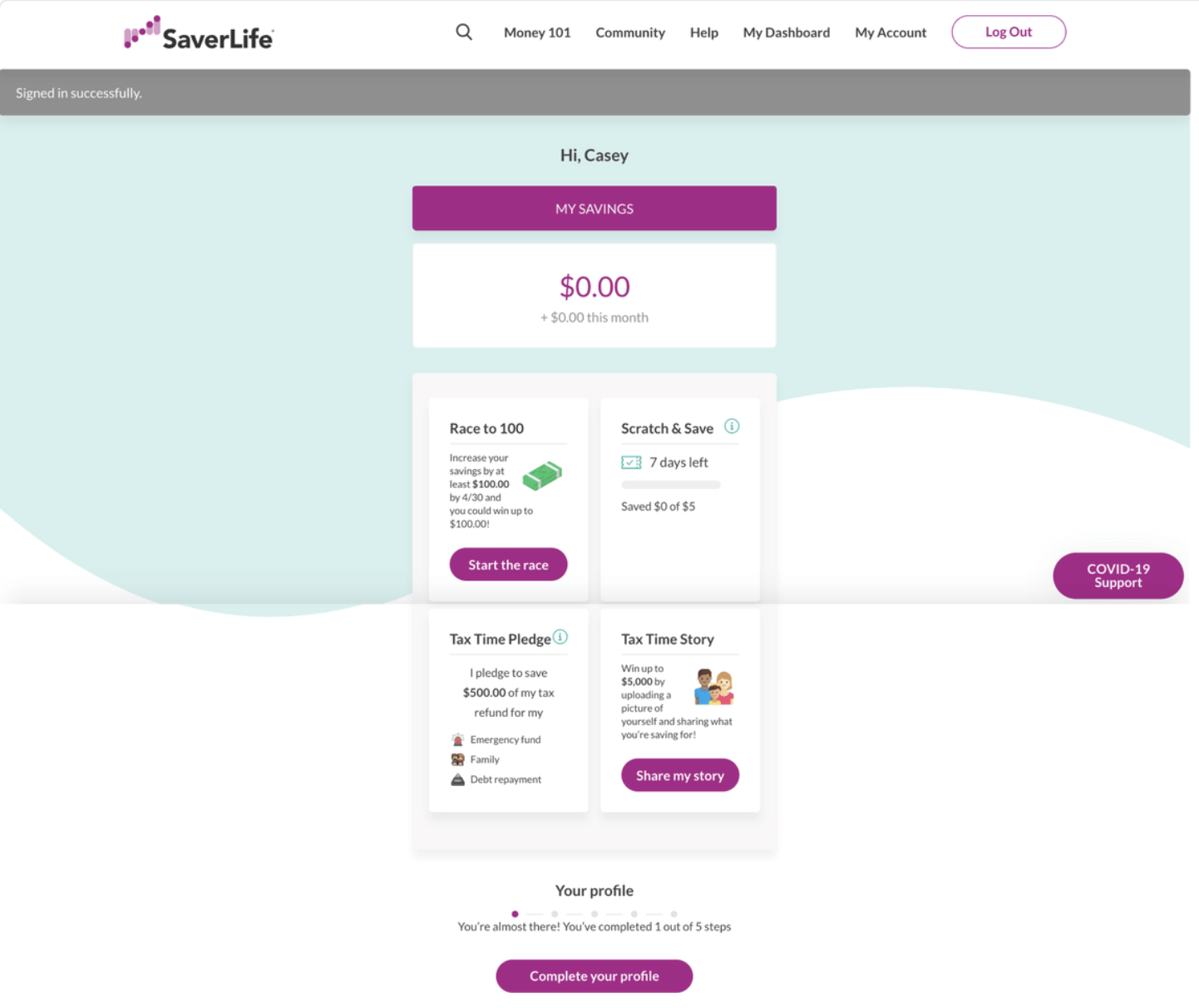
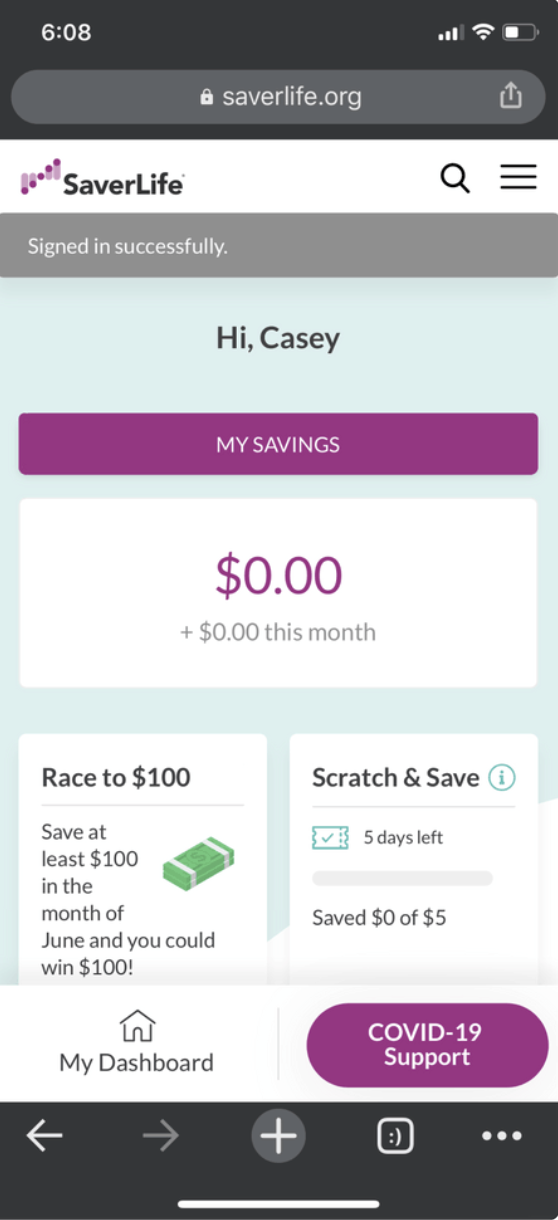
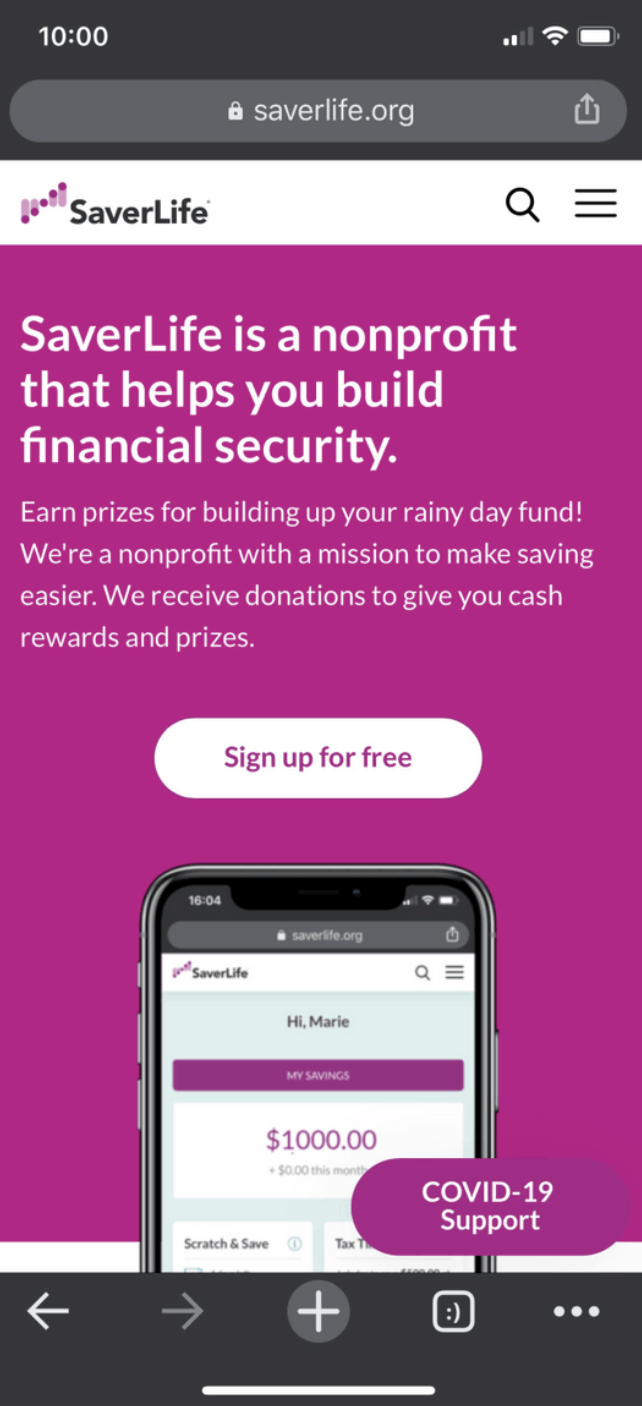
The dashboard showed only sweepstakes
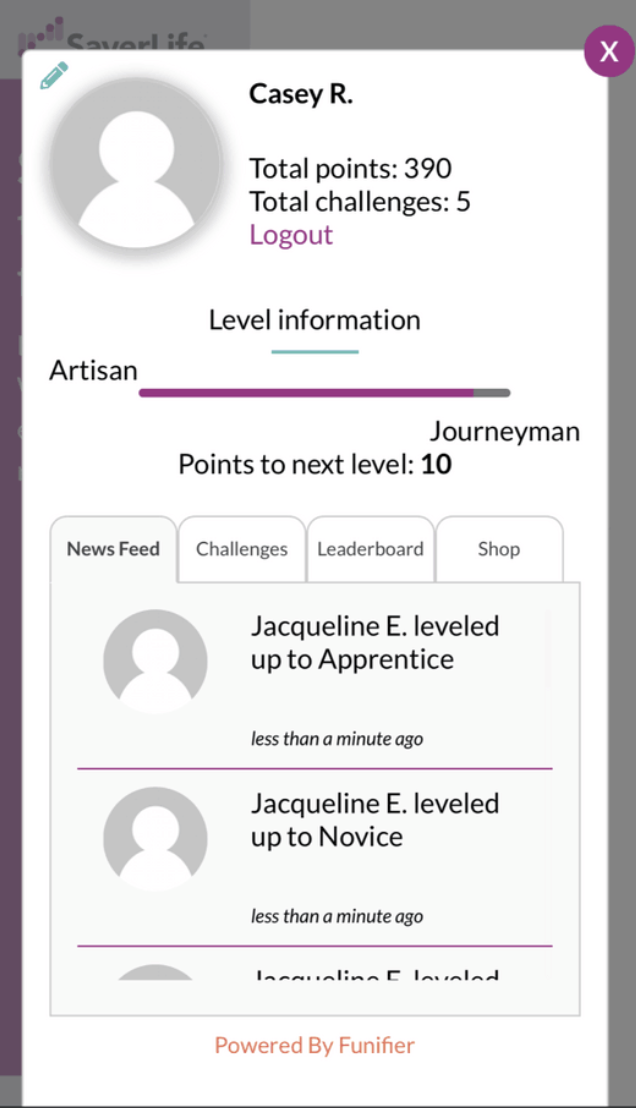
Most members never found the points system
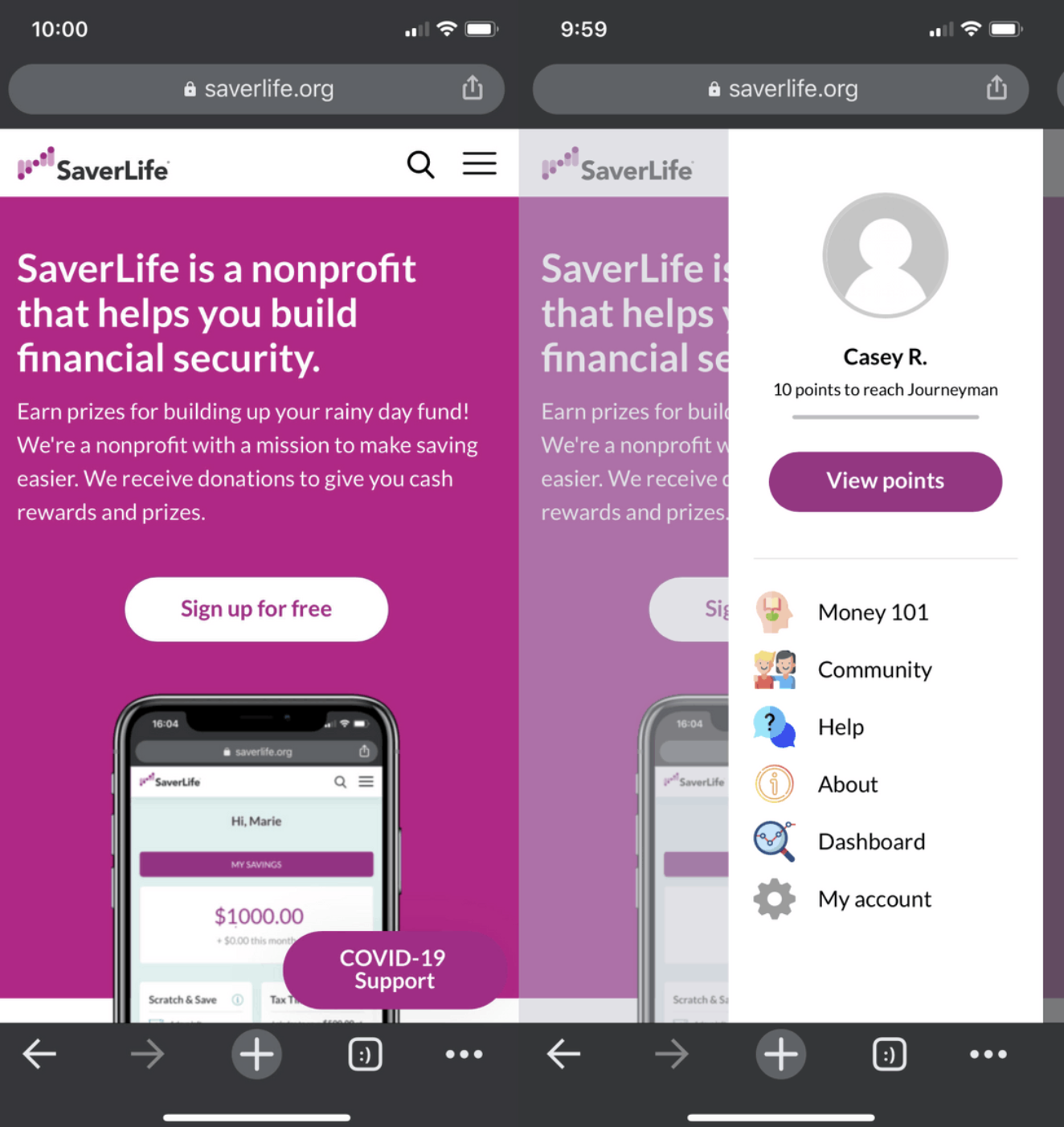
Gamification hid in the hamburger menu
No link between actions and savings progress
After
Cultivating a desire to save via gamification
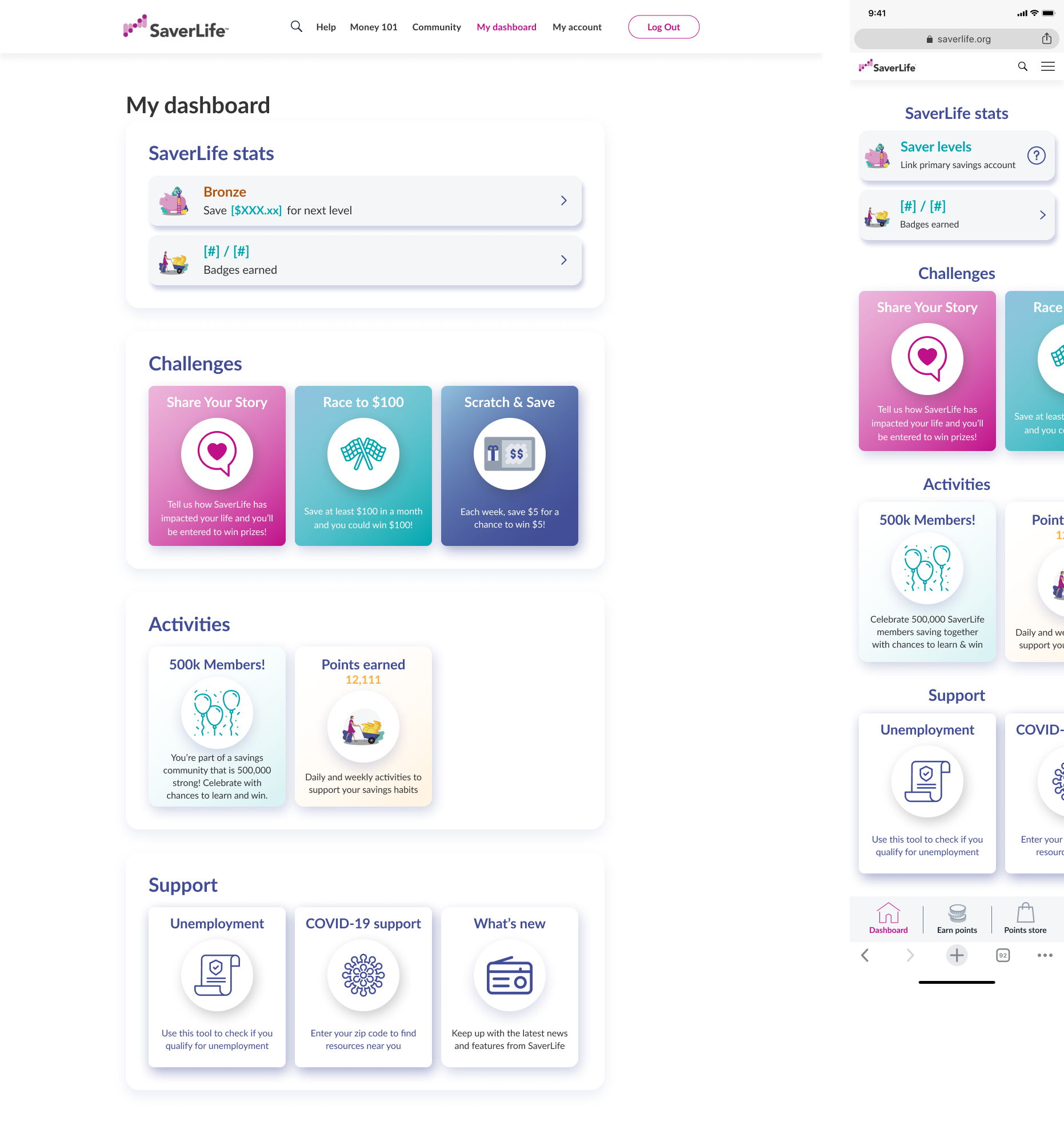
Clearer navigation and dashboard visuals
Core features front and center
Point activities and a points store that create weekly habits
02
Context · Research
Money was already a complicated subject for our members
When I joined in March 2020, our members, low-income Americans, were navigating circumstances that strained an already complicated relationship with money.
Who we designed for
Volatile, inconsistent paychecks
Supporting family on very tight budgets
Saving little, if at all
Unaware of what a savings habit could do
What they encountered
Disjointed blogs, forums and gamification
Gamification tucked in the hamburger menu
No clear link between features
The gap
The product sold a chance to win money, not the ability to save consistently.
The research
Our Chief Impact Officer wanted to “integrate gamification into the core UX.” However, that was determining a solution before the problem was understood. So I started with what members were trying to do, and what stood in their way. There were four linked barriers:
Where is it?
Activities on the dashboard get discovered easily
Can I do this?
Dashboard-led content could lead to more completed activities.
Is this legit?
Improved visuals and a more modern interface could make SaverLife feel more legit.
Will it help me?
Trust could lead members to engage with financial literacy content and act on it once they had the means to do so.
Root cause
No recurring reason to engage.
The challenge
Low-income Americans struggle to build savings habits, and SaverLife wasn’t giving them the structure or motivation to return weekly. These were adults earning under $70K with volatile incomes, tight budgets and varied financial literacy.
North star metric
12-week retention rate so it could track sustained engagement.
The opportunity
“When I have an unexpected expense coming up, I want money set aside, so I can avoid predatory loans and keep my family stable.”
03
Approach
Was gamification actually the answer?
The alternatives
Education only
Mission-aligned, low lift.
Doesn’t change the belief “I need a stable income to save.”
Social accountability
Proven motivation, cheap.
Hard to bootstrap with few users; privacy concerns.
Behavioral nudges
Direct, proven for habits.
Needs opt-in; emails already ignored and felt spammy.
Winning money or learning something new shaped how they saw SaverLife.
Little nudges
“I already knew I should save, but this made me actually do it.”
Real learning
Engaged members cared more about financial literacy, not just points.
Accountability
Gamification brought back even members who “already know this stuff.”
What this validated
Mental model shift
From “a lottery” to “my weekly savings check-in.”
Dual requirement
Habits need capability (education) and motivation (gamification).
Structural impact
Visibility plus a recurring cadence made the change last.
05
Reflections
What surprised me
Members didn’t talk about gamification. They said the activities “reminded them to think about saving” and “gave them permission to feel proud of small progress.”
Design implications
Context over complexity
Seasonal themes and life events can beat sophisticated personalization.
Permission to act
People know what to do; they need cues and validation to do it.
Small wins matter
Pride in small progress motivated more than point totals.
Key learning
Consistently bringing data and user insight to the table earns influence over the roadmap, even without perfect conditions.